- 1920 Palm Beach Lakes Blvd #211, West Palm Beach, FL 33409
- Telehealth: Serving clients throughout Florida
 Skip to content
 Do you find yourself caught in cycles of negative thinking that you cannot seem to break? Do you catastrophize situations, assume the worst, or hold onto beliefs about yourself that leave you feeling stuck, ashamed, or hopeless? Does anxiety, depression, or another emotional struggle keep showing up in your life no matter how hard you try to push through it?
If so, Cognitive Behavioral Therapy — commonly known as CBT — may be exactly the approach you have been looking for.
CBT is one of the most extensively researched and widely practiced forms of psychotherapy in the world. It is grounded in a simple but powerful idea: the way we think about ourselves, others, and the world around us directly shapes how we feel and how we behave. By learning to identify and change unhelpful thinking patterns, we can significantly improve our emotional wellbeing and quality of life.
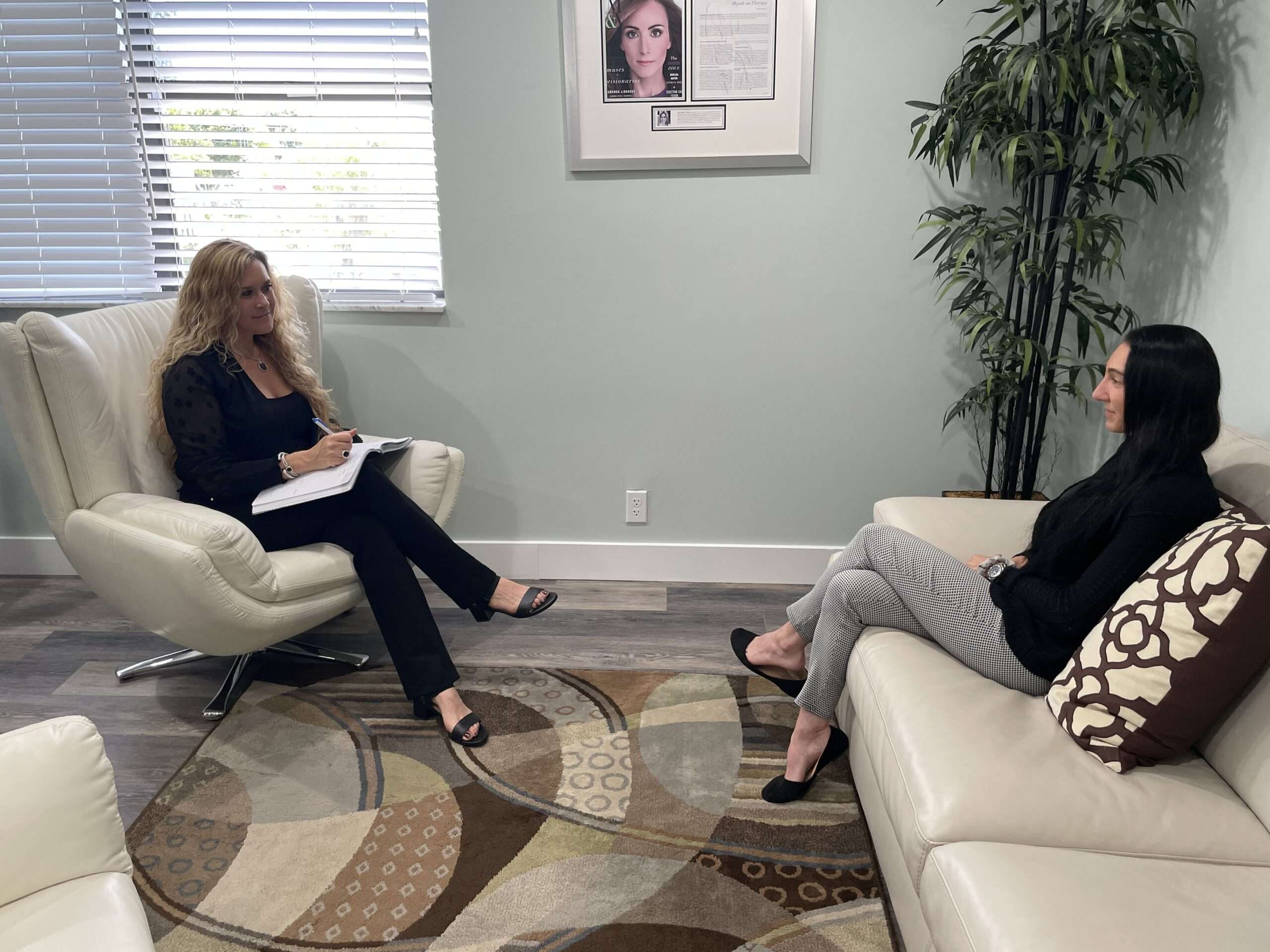
At Whole Health Psychological Center, our team of licensed therapists provides CBT for children, teenagers, and adults in West Palm Beach and throughout Florida. We offer in-person sessions at our West Palm Beach office and telehealth sessions for clients throughout Florida.
CBT was developed in the 1960s by psychiatrist Dr. Aaron Beck and has since become the gold standard treatment for a wide range of mental health conditions. It has been validated in thousands of clinical studies and is recommended by leading health organizations worldwide including the American Psychological Association and the National Institute for Health and Care Excellence.
The core premise of CBT is that our thoughts, feelings, and behaviors are deeply interconnected. When we experience emotional distress, it is often driven not by events themselves but by the meaning we assign to those events — our interpretations, assumptions, and beliefs. These thought patterns can become automatic and habitual over time, operating below our conscious awareness and shaping our emotional experience in ways we may not even recognize.
CBT works by bringing these automatic thought patterns into conscious awareness, examining them critically, and replacing distorted or unhelpful thoughts with more balanced and realistic ones. This process — known as cognitive restructuring — reliably produces meaningful improvements in mood, anxiety, and overall functioning.
CBT also addresses the behavioral side of emotional struggles. Avoidance, withdrawal, and other behavioral patterns often maintain and worsen emotional difficulties over time. CBT helps clients identify and change these patterns, gradually building a more engaged and fulfilling life.
CBT has the strongest evidence base of any psychological treatment for a wide range of conditions. At Whole Health Psychological Center we use CBT to help clients with:
Anxiety disorders including generalized anxiety disorder, social anxiety, panic disorder, health anxiety, and specific phobias.
Depression including major depressive disorder, persistent depressive disorder, and postpartum depression.
OCD — CBT combined with Exposure and Response Prevention (ERP) is the gold standard treatment for Obsessive Compulsive Disorder.
PTSD and trauma where CBT helps clients process traumatic memories and challenge the distorted beliefs that trauma often creates about the self, others, and the world.
Eating disorders addressing the distorted thinking patterns around food, body image, and self-worth.
Insomnia through a specialized form called CBT-I, which is the most effective long-term treatment for chronic sleep difficulties.
ADHD where CBT addresses the negative thinking patterns and executive function challenges associated with the condition.
Anger management by helping clients identify the thoughts and triggers that drive angry reactions and develop more effective responses.
Low self-esteem by challenging the deeply held negative beliefs about the self that underlie persistent feelings of inadequacy and shame.
Relationship difficulties where CBT helps clients recognize the thinking patterns and behavioral habits that create conflict and disconnection.
CBT is a collaborative, structured, and goal-oriented therapy. Unlike some therapeutic approaches that are more open-ended and exploratory, CBT has a clear framework and a focus on practical skill-building. Most clients find it refreshingly actionable.
Identifying Automatic Thoughts
The first step in CBT is learning to notice your automatic thoughts — the rapid, reflexive interpretations your mind makes in response to situations. These thoughts often happen so quickly that we are barely aware of them, yet they powerfully shape our emotional responses. Your therapist will help you develop the skill of catching these thoughts as they arise.
Examining the Evidence
Once you have identified an automatic thought, CBT invites you to examine it like a scientist. Is this thought actually true? What is the evidence for and against it? Are there other ways of interpreting this situation? This process — called cognitive restructuring — helps loosen the grip of distorted thinking patterns and replace them with more balanced perspectives.
Behavioral Experiments
CBT does not stop at changing thoughts. It also involves testing new behaviors in the real world. Behavioral experiments help clients discover that their feared predictions often do not come true and that engaging with avoided situations gradually reduces anxiety and increases confidence.
Homework and Skills Practice
CBT is an active therapy. Between sessions your therapist may assign structured exercises — thought records, behavioral experiments, or skills practice — that help you apply what you are learning in therapy to your daily life. This between-session practice is one of the reasons CBT produces such durable results.
CBT tends to be the approach that works especially well for the kinds of concerns that show up often in Palm Beach County — the professional whose anxiety has turned every email into a worst-case scenario, the parent whose catastrophic thinking about hurricane season has started to spill into daily life, the retiree whose depression is being fueled by a steady internal monologue of “I should be happier than this,” the teenager whose social anxiety is built on a specific set of predictions about what other kids are thinking. CBT is structured enough to feel concrete, practical enough to produce changes you can measure, and flexible enough to adapt to whatever the thinking patterns actually are.
Our CBT therapists work with clients from throughout West Palm Beach — including Northwood, Flamingo Park, El Cid, Southend, Grandview Heights, and Downtown — as well as from Palm Beach Gardens, Jupiter, Wellington, Boynton Beach, Boca Raton, and Delray Beach. If you have tried therapy before that felt too open-ended, or if you want a therapy that gives you actual tools you can use between sessions, CBT is often a good fit.
Your First Session
Your first session focuses on understanding your concerns, your history, and your goals for therapy. Your therapist will explain the CBT model, answer your questions, and begin to identify the thinking patterns and behavioral habits that are contributing to your difficulties.
Building Your Treatment Plan
CBT is goal-oriented. You and your therapist will identify specific, measurable goals for treatment and track your progress toward them. Most CBT treatment plans have a defined structure — typically 12 to 20 sessions — though the timeline varies depending on the complexity of your concerns.
Ongoing Sessions
Sessions are 55 minutes and occur weekly. We offer in-person sessions at our West Palm Beach office at 1920 Palm Beach Lakes Blvd #211, West Palm Beach, FL 33409, and secure telehealth video sessions for clients throughout Florida.
One of CBT’s great strengths is that it tends to produce meaningful results in a relatively short timeframe compared to other therapeutic approaches. Many clients experience significant improvement within 12 to 16 sessions. The skills learned in CBT also continue to benefit clients long after therapy ends because they become internalized tools for managing future challenges.
We accept most major insurance plans for CBT therapy, including Aetna, Blue Cross Blue Shield / Florida Blue, Cigna / Evernorth, United Health Care, Tricare East, and Medicare Part B.
Not sure if your plan covers CBT? Call our office at (561) 721-6400 and our team will verify your benefits before your first appointment.
How is CBT different from other types of therapy?
CBT is more structured and skills-focused than many other therapeutic approaches. Rather than spending extended time exploring the past, CBT focuses primarily on current thinking patterns and behaviors and equips clients with practical tools they can use immediately. That said, CBT does not ignore history — understanding where thinking patterns came from is often an important part of changing them. For a more body-based or skills-intensive emotional regulation approach, see our DBT therapy page.
Is CBT only for people with serious mental health conditions?
Not at all. While CBT has strong evidence for treating clinical conditions like depression, anxiety, and OCD, it is equally valuable for anyone who wants to manage stress more effectively, improve their relationships, build self-confidence, or simply think and feel better. Many people pursue CBT for personal growth rather than a specific diagnosis.
Will I have to do homework between sessions?
CBT does typically involve between-session practice — thought records, behavioral experiments, or skills exercises. This practice is one of the key factors that makes CBT effective. That said, your therapist will tailor the assignments to your schedule and capacity, and the work is always designed to feel manageable rather than overwhelming.
How do I know if CBT is the right approach for me?
CBT tends to be particularly well-suited for people who prefer a structured, practical approach to therapy and who are interested in understanding the connection between their thoughts, feelings, and behaviors. During your first session your therapist will discuss your needs, preferences, and goals and help you determine whether CBT is the best fit — or whether another approach or combination of approaches might serve you better.
Can CBT be combined with medication?
Yes. For many conditions, the combination of CBT and medication produces better outcomes than either treatment alone. Our team includes both licensed therapists and a psychiatric nurse practitioner, allowing us to coordinate therapy and medication management under one roof when appropriate.
Do you offer CBT for children and teenagers?
Yes. CBT has been adapted for use with children and adolescents and has strong evidence for treating anxiety, depression, OCD, and other conditions in younger clients. Our therapists use age-appropriate CBT techniques that engage children and teenagers in ways that feel relevant and accessible to them. Learn more about our child therapy and teen therapy services.
The thoughts we carry about ourselves and the world are not fixed facts — they are interpretations, and interpretations can change. CBT offers a clear, proven, and practical path to making that change happen.
Our team of licensed therapists at Whole Health Psychological Center is here to guide you through that process. Whether you are struggling with anxiety, depression, trauma, OCD, or simply patterns of thinking that are holding you back, we are here to help.
We serve clients in person in West Palm Beach and via telehealth throughout Florida. Call us today at (561) 721-6400 or schedule online to take the first step. New client appointments are typically available within one week. Evening and weekend sessions are available.
Call us at (561) 721-6400, email us at info@wholehealthpsych.com, or visit us in person at 1920 Palm Beach Lakes Blvd #211, West Palm Beach, FL 33409. Telehealth is available throughout Florida.
We provide Cognitive Behavioral Therapy in West Palm Beach, Palm Beach Gardens, Wellington, Boca Raton, Boynton Beach, Jupiter, Delray Beach, and throughout Florida via telehealth.

Deep breathing, a tool for decreasing anxiety.

Tips for parents during the pandemic

Sports Psychology is the use of psychological knowledge and skills to encourage optimal performance and well-being of athletes. It also addresses the developmental, social, and systemic components of sports and the organizations, coaches, and players involved.