- 1920 Palm Beach Lakes Blvd #211, West Palm Beach, FL 33409
- Telehealth: Serving clients throughout Florida
 Skip to content
 Do you wake up exhausted even after a full night’s sleep? Does a heavy feeling of sadness or emptiness follow you throughout the day, making it difficult to find joy in the things you once loved? Are you going through the motions of daily life while feeling disconnected from everything and everyone around you?
Depression is more than just feeling sad. It can make even the simplest tasks — getting out of bed, answering an email, preparing a meal — feel overwhelming. You may find yourself withdrawing from relationships, struggling to concentrate at work, or wondering whether things will ever feel different.
If this sounds familiar, you are not alone. And more importantly, you do not have to keep feeling this way.
At Whole Health Psychological Center, our team of licensed therapists provides compassionate, evidence-based depression treatment in West Palm Beach, FL. We offer in-person sessions at our West Palm Beach office and telehealth appointments for clients throughout Florida. We are here to help you understand what is driving your depression and give you the tools to start feeling like yourself again.
Depression is one of the most prevalent mental health conditions in the world. According to the National Institute of Mental Health, an estimated 21 million adults in the United States experience at least one major depressive episode each year. Yet despite how common it is, many people suffer in silence — either not recognizing what they are experiencing as depression or feeling too overwhelmed to seek help.
Depression does not look the same for everyone. Some people experience persistent sadness and tearfulness. Others feel emotionally numb or empty. Many describe a loss of motivation, difficulty concentrating, changes in sleep or appetite, or a growing sense of hopelessness about the future. Some people with depression do not feel sad at all — instead they feel irritable, restless, or simply flat. Depression also frequently co-occurs with anxiety, and many clients find themselves dealing with both at the same time.
Whatever depression looks like for you, it is a real medical condition with real treatment options. You do not need to push through it alone.
Depression rarely has a single cause. It typically develops from a combination of biological, psychological, and life factors working together. Common contributors include:
Biological factors such as genetics, brain chemistry imbalances, hormonal changes, chronic illness, or the side effects of certain medications.
Psychological factors such as a history of trauma, low self-esteem, perfectionism, negative thinking patterns, or unresolved grief.
Life circumstances such as relationship difficulties, job loss, financial stress, isolation, major life transitions, or the loss of a loved one.
Understanding what is driving your depression is a critical first step in treating it effectively. Our therapists take the time to understand your unique history and circumstances so that your treatment plan addresses the root causes — not just the symptoms.
Our team of licensed therapists uses evidence-based approaches that have been shown to be highly effective for depression. Depending on your needs, goals, and preferences, your therapist may draw from:
Cognitive Behavioral Therapy (CBT)
CBT is one of the most well-researched treatments for depression. It works by helping you identify and challenge the negative thought patterns that fuel depressive episodes. When you learn to recognize thoughts like “I am worthless” or “nothing will ever get better” as distorted beliefs rather than facts, you can begin to shift your emotional experience and behavior.
Psychodynamic Therapy
For depression rooted in unresolved past experiences or relationship patterns, psychodynamic therapy helps you explore the deeper emotional sources of your pain. By bringing unconscious patterns into awareness, this approach creates lasting change rather than temporary relief.
Behavioral Activation
Depression often creates a cycle where low mood leads to withdrawal, and withdrawal deepens low mood. Behavioral activation breaks this cycle by helping you gradually re-engage with meaningful activities and relationships, rebuilding a sense of purpose and pleasure.
Mindfulness-Based Approaches
Mindfulness and acceptance-based therapies help you develop a different relationship with difficult emotions — one based on awareness and compassion rather than avoidance or self-criticism.
For some individuals, therapy alone may not be enough. Our licensed psychiatric nurse practitioner offers comprehensive psychiatric evaluations and medication management for depression. If medication is appropriate for your situation, we can coordinate both therapy and psychiatric care under one roof at our West Palm Beach office.
Depression in Palm Beach County does not look the way people expect. From the outside, life here can appear to be all sunshine and good fortune — and for many people that image makes their depression harder to talk about, not easier. If you live in a place where everyone seems to be doing well, the weight of feeling empty or hopeless can carry an extra layer of shame.
Our therapists work with clients from throughout West Palm Beach — including Northwood, Flamingo Park, El Cid, Southend, Grandview Heights, Prospect Park, Downtown, and the neighborhoods around the Palm Beach Lakes corridor — as well as from Palm Beach Gardens, Jupiter, Wellington, Boynton Beach, Boca Raton, and Delray Beach. We see how depression shows up across the county: in the snowbird family navigating the loneliness that hits every April when the community thins out, in the parent holding everything together during hurricane season while quietly struggling to get out of bed, in the professional who appears to have it all and yet feels like a stranger in their own life, in the retiree who moved here expecting the Florida dream and found the transition harder than anticipated.
Depression also intersects with real, practical realities of life here — the financial strain of hurricane-driven insurance costs, the isolation that comes with living far from extended family, and the difficulty of accessing mental health care in a state with a documented physician shortage. We take all of this seriously. Whatever is driving your depression, we are here to help you work through it.
Taking the first step toward therapy can feel daunting, especially when depression has already drained your energy and motivation. We want you to know what to expect so that reaching out feels less overwhelming.
Your First Session
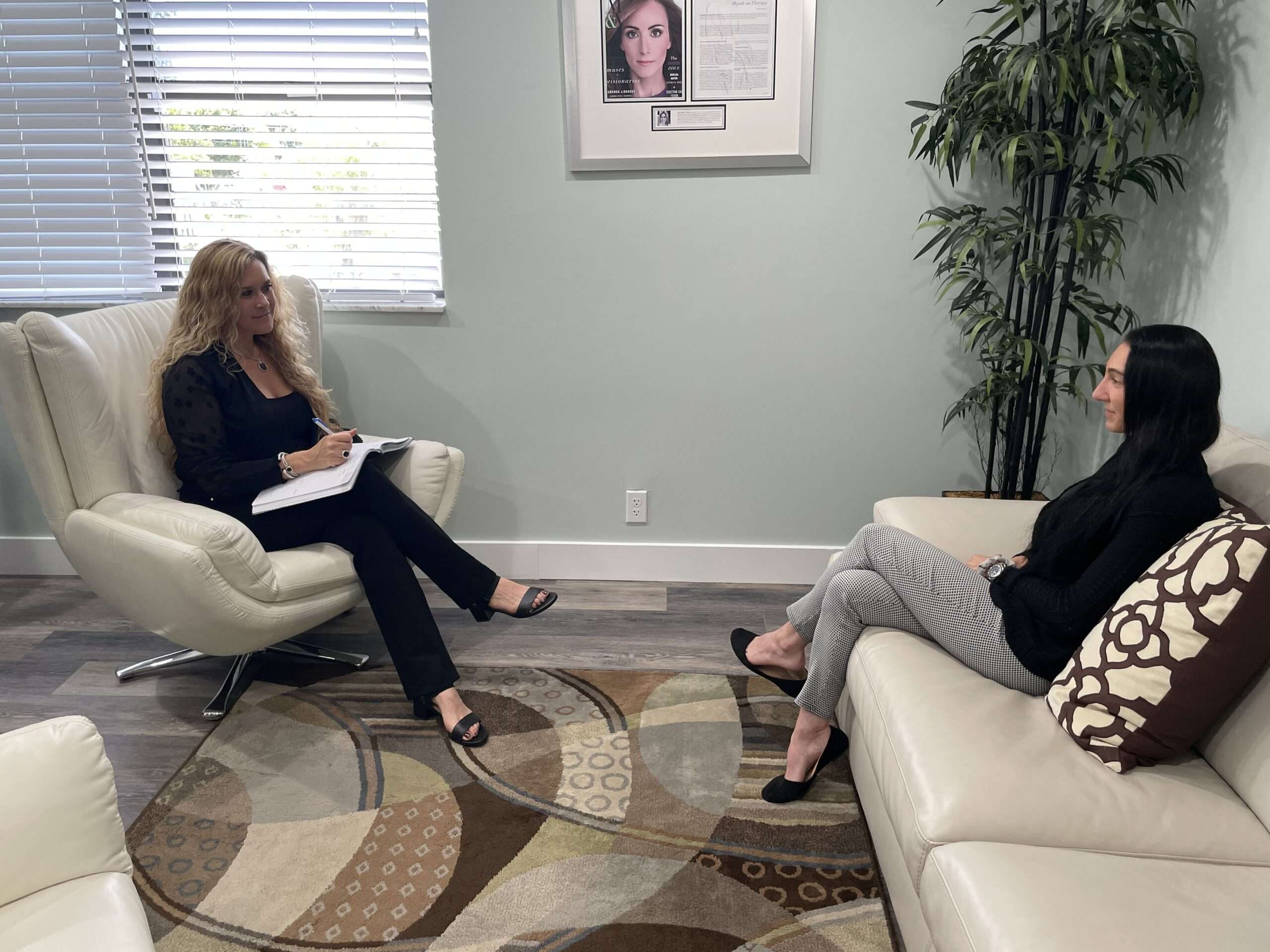
Your first session is about getting to know you. Your therapist will ask about your current symptoms, your history, your relationships, and what has brought you to therapy at this point in your life. There is no pressure to share everything at once. We move at your pace.
Building Your Treatment Plan
Once your therapist has a clear understanding of your situation, you will work together to create a personalized treatment plan with goals that are meaningful to you. Treatment plans are flexible — they evolve as you do.
Ongoing Sessions
Most clients meet weekly, especially at the beginning of treatment. Sessions are 55 minutes. We offer in-person sessions at our West Palm Beach office located at 1920 Palm Beach Lakes Blvd #211, West Palm Beach, FL 33409, and secure telehealth video sessions for clients throughout Florida.
Every person’s journey is different. Some clients experience meaningful improvement within 8 to 12 sessions. Others benefit from longer-term therapy, particularly when depression is connected to deeper patterns or past trauma. Your therapist will regularly check in about your progress and adjust the approach as needed.
We understand that accessing mental health care should be as easy as possible. That is why we offer two convenient ways to work with our therapists:
In-Person Sessions at our West Palm Beach office at 1920 Palm Beach Lakes Blvd #211. Our comfortable, welcoming office provides a safe and private space for your therapy sessions. We serve clients from West Palm Beach, Palm Beach Gardens, Wellington, Boca Raton, Boynton Beach, Jupiter, Delray Beach, and surrounding Palm Beach County communities.
Telehealth Sessions via secure, HIPAA-compliant video for clients throughout Florida. Whether you are managing a busy schedule, prefer the comfort of your own home, or live outside the West Palm Beach area, telehealth makes it possible to access the same high-quality care from anywhere in the state.
We accept most major insurance plans for depression therapy, including Aetna, Blue Cross Blue Shield / Florida Blue, Cigna / Evernorth, United Health Care, Tricare East, and Medicare Part B.
Not sure if your plan is covered? Call our office at (561) 721-6400 and our team will verify your benefits before your first appointment. We want to make sure cost is never a barrier to getting the help you need.
How do I know if what I’m feeling is depression or just stress?
Stress is typically tied to specific circumstances and tends to lift when the situation resolves. Depression persists regardless of what is happening externally and often has no clear cause. If you have felt persistently sad, empty, or hopeless for more than two weeks — or if your mood is significantly interfering with your daily life — it is worth speaking with a therapist.
Will I need medication for depression?
Not necessarily. Many people experience significant improvement through therapy alone. Others benefit from a combination of therapy and medication. Our team includes both licensed therapists and a psychiatric nurse practitioner so we can support you either way. We will never push medication — the decision is always yours.
What if I have tried therapy before and it didn’t help?
The fit between a client and therapist matters enormously. So does the type of therapy. If a previous experience was not helpful, it does not mean therapy cannot work for you — it may mean you need a different approach or a different therapist. We encourage you to share your past experiences so we can tailor our approach accordingly.
Do you offer therapy for postpartum depression?
Yes. We have therapists who specialize in postpartum depression and work with individuals navigating the complex emotional challenges that can accompany new parenthood. Our therapists provide a supportive, non-judgmental space to process these experiences.
Is telehealth as effective as in-person therapy for depression?
Research consistently shows that telehealth therapy is equally effective as in-person therapy for depression. Many clients actually prefer the convenience and comfort of attending sessions from home. We offer telehealth to all clients throughout Florida.
Do you offer evening or weekend appointments?
Yes. We offer daytime, evening, and weekend appointments to accommodate busy schedules. New client appointments are typically available within one week.
Depression can make it feel like things will never change. But with the right support, they can. Our team of licensed therapists at Whole Health Psychological Center has helped many people in West Palm Beach and throughout Florida find their way out of depression and back to a life that feels worth living.
You do not have to keep waiting for things to get better on their own. Reaching out is the hardest step — and you are already here.
Call us today at (561) 721-6400 or click the button below to schedule your first appointment. New client appointments are typically available within one week. Evening and weekend sessions are available.
If you are ready to take the first step, we make it easy to get started. Call us at (561) 721-6400, email us at info@wholehealthpsych.com, or visit us in person at 1920 Palm Beach Lakes Blvd #211, West Palm Beach, FL 33409. Telehealth is available throughout Florida.
We provide depression therapy in West Palm Beach, Palm Beach Gardens, Wellington, Boca Raton, Boynton Beach, Jupiter, Delray Beach, and throughout Florida via telehealth.

Deep breathing, a tool for decreasing anxiety.

Tips for parents during the pandemic

Sports Psychology is the use of psychological knowledge and skills to encourage optimal performance and well-being of athletes. It also addresses the developmental, social, and systemic components of sports and the organizations, coaches, and players involved.