- 1920 Palm Beach Lakes Blvd #211, West Palm Beach, FL 33409
- Telehealth: Serving clients throughout Florida
 Skip to content
 Did you imagine that having a baby would bring overwhelming joy — and instead find yourself feeling sad, empty, anxious, or utterly unlike yourself? Are you struggling to bond with your baby, feeling detached from the experience of new motherhood, or wondering whether you made a terrible mistake? Do you feel like you should be happy but cannot access that happiness no matter how hard you try — and then feel crushing guilt for feeling that way?
Perhaps you are barely sleeping, overwhelmed by the responsibility of caring for a newborn, and running on empty — and the people around you keep saying “enjoy every moment” while you are secretly wondering how you are going to get through the next hour.
Or perhaps it is not sadness but terror — an anxiety so intense and relentless that you cannot stop catastrophizing about your baby’s safety, cannot sleep even when your baby sleeps, and feel like you are failing at something that is supposed to come naturally.
Whatever you are experiencing, please know this — there is nothing wrong with you as a mother. There is nothing wrong with you as a person. What you are experiencing is a medical condition, it is not your fault, and it is treatable.
At Whole Health Psychological Center, our team of licensed therapists provides compassionate, specialized postpartum depression therapy in West Palm Beach and throughout Florida. We offer in-person sessions at our West Palm Beach office and telehealth sessions for new mothers throughout Florida — because we understand that getting out of the house with a newborn is not always possible.
Postpartum depression is a mood disorder that affects women after childbirth. It is significantly more serious and more persistent than the “baby blues” — the mild mood fluctuations, tearfulness, and emotional sensitivity that affect up to 80 percent of new mothers in the first week or two after birth and typically resolve on their own.
Postpartum depression affects approximately 1 in 7 new mothers — making it one of the most common complications of childbirth. Yet despite its prevalence it remains widely underdiagnosed and undertreated, largely because of the stigma surrounding mental health struggles in new mothers and the cultural pressure to appear happy and grateful during what is supposed to be a joyful time.
Postpartum depression typically develops within the first few weeks to months after birth, though it can develop up to a year postpartum. Without treatment it often does not resolve on its own — and can have significant impacts on the mother’s wellbeing, her relationship with her baby, her partnership, and her family.
The good news is that postpartum depression responds very well to treatment. With the right support, the vast majority of women recover fully.
While postpartum depression is the most well-known postpartum mood condition, it is important to recognize that new mothers can experience a range of perinatal mood and anxiety disorders including:
Postpartum anxiety which is actually more common than postpartum depression and is characterized by relentless worry, intrusive thoughts, physical symptoms of anxiety such as racing heart and shortness of breath, and an inability to relax or feel calm.
Postpartum OCD characterized by intrusive, unwanted thoughts — often about harm coming to the baby — that are deeply distressing and ego-dystonic. These thoughts are a symptom of OCD, not a reflection of the mother’s desires or intentions.
Postpartum PTSD which can develop following a traumatic birth experience, a medical emergency, a NICU stay, or a previous pregnancy loss.
Postpartum rage which is a less commonly discussed but very real manifestation of postpartum mood disorders — characterized by intense irritability, anger, and explosive reactions that feel completely out of character.
Postpartum psychosis which is a rare but serious condition requiring immediate medical attention, characterized by hallucinations, delusions, and confusion. If you or someone you know is experiencing these symptoms please seek emergency care immediately.
Our therapists are trained to recognize and treat the full spectrum of perinatal mood and anxiety disorders — not just postpartum depression.
Postpartum depression is not caused by anything you did or did not do. It develops from a complex combination of factors including:
Hormonal changes — the dramatic drop in estrogen and progesterone following birth is one of the most significant hormonal shifts a woman’s body ever experiences, and for some women this triggers a depressive episode.
Sleep deprivation which has profound and well-documented effects on mood, emotional regulation, and cognitive functioning.
The psychological adjustment to motherhood — becoming a mother involves a fundamental shift in identity, role, and life structure that can be disorienting and overwhelming even under the best circumstances.
Previous mental health history — women with a history of depression, anxiety, or other mental health conditions are at higher risk for postpartum mood disorders.
Lack of social support — isolation is one of the most significant risk factors for postpartum depression, and the modern experience of new motherhood is often profoundly isolating.
Relationship stress, financial pressure, and other life stressors that compound the challenges of the postpartum period.
Our therapists use evidence-based approaches that have been shown to be highly effective for postpartum depression and related conditions.
Cognitive Behavioral Therapy for Postpartum Depression CBT helps new mothers identify and challenge the distorted thoughts that fuel postpartum depression — including harsh self-criticism, catastrophic thinking about their adequacy as a mother, and all-or-nothing beliefs about what good mothering looks like. CBT also addresses the behavioral patterns — isolation, avoidance, and neglect of self-care — that maintain depression.
Interpersonal Therapy Interpersonal therapy focuses on the relational context of postpartum depression — addressing the major role transitions, relationship changes, and interpersonal conflicts that so often accompany new motherhood. It is one of the most well-researched treatments specifically for postpartum depression.
Mindfulness-Based Approaches Mindfulness helps new mothers develop a more compassionate and less reactive relationship with their difficult thoughts and emotions — reducing the secondary suffering of self-judgment and shame that so often compounds postpartum distress.
Trauma-Informed Therapy For mothers experiencing postpartum PTSD following a traumatic birth or pregnancy loss, trauma-focused approaches including EMDR can be highly effective in processing the traumatic experience and reducing its ongoing impact.
Medication Management For some women medication is an important part of postpartum depression treatment. Our licensed psychiatric nurse practitioner provides evaluations and medication management and can advise on options that are safe for breastfeeding mothers. Coordinating therapy and medication management under one roof at our West Palm Beach office provides a truly integrated approach to care.
New motherhood in Palm Beach County carries its own particular isolation. Many new moms we see here moved to Florida from somewhere else — and their own mothers, sisters, and oldest friends are a plane flight away. The mother-in-law who might have helped out every week in New Jersey is now a vacation visitor who comes twice a year. The friend group that was supposed to help carry you through those first months is scattered across zip codes and time zones. And the people you are meeting locally are often in a different life stage, or a different socioeconomic bracket, or simply too busy to slow down for the kind of real connection new motherhood actually requires.
Layer in the unique pressures of new motherhood here — the heat and humidity that make it hard to take an overwhelmed infant outside half the year, hurricane season anxiety when you are suddenly responsible for keeping a newborn safe through a storm, the cultural pressure to look put-together in a community where appearances matter — and you have a recipe for the kind of isolation that postpartum depression thrives in.
Our therapists work with new mothers from throughout West Palm Beach — including Northwood, Flamingo Park, El Cid, Southend, Grandview Heights, and Downtown — as well as from Palm Beach Gardens, Jupiter, Wellington, Boynton Beach, Boca Raton, and Delray Beach. Whatever has brought you here — postpartum depression, postpartum anxiety, postpartum OCD, postpartum PTSD after a traumatic birth, or simply the sense that something is wrong and you need help figuring out what — we will meet you with skill, with patience, and without judgment.
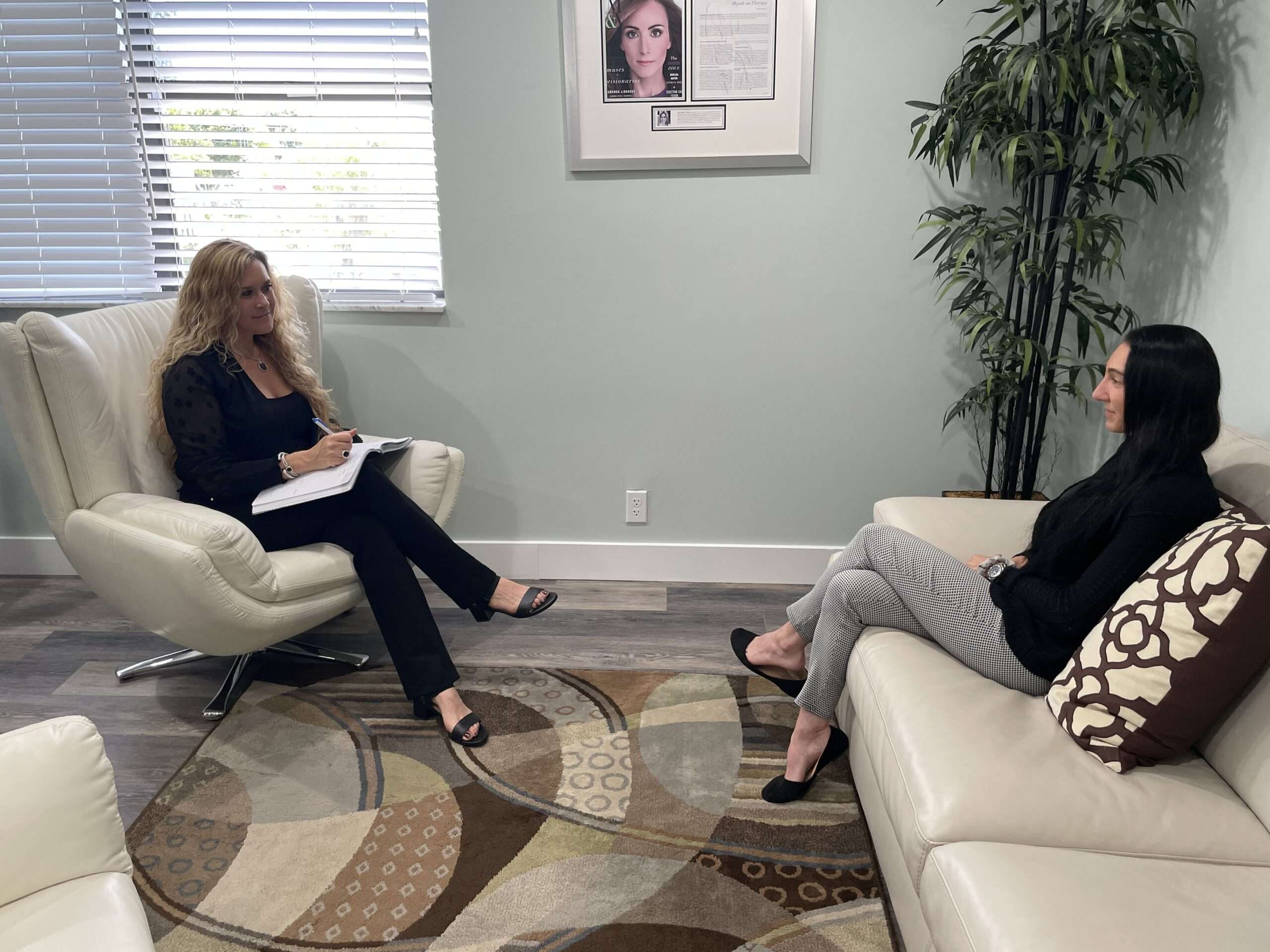
Your First Session Your first session is a gentle, non-judgmental space to share what you have been experiencing. Your therapist understands the courage it takes to reach out when you are struggling — and will meet you with warmth, compassion, and genuine care. You are welcome to bring your baby to sessions if needed.
Flexible Scheduling We understand that scheduling is complicated with a newborn. We offer daytime, evening, and weekend appointments and telehealth sessions that allow you to attend from home — making it as easy as possible to access the support you need.
How Long Does Postpartum Depression Therapy Take? Many women experience significant improvement within 8 to 12 sessions of targeted postpartum therapy. Your therapist will assess your progress regularly and adjust the approach as needed.
In-Person and Telehealth Sessions We offer in-person postpartum depression therapy sessions at our West Palm Beach office at 1920 Palm Beach Lakes Blvd #211, West Palm Beach, FL 33409. Telehealth sessions are available for clients throughout Florida via secure, HIPAA-compliant video — an option that many new mothers find invaluable for the flexibility and convenience it provides.
We accept most major insurance plans for postpartum depression therapy, including Aetna, Blue Cross Blue Shield / Florida Blue, Cigna / Evernorth, United Health Care, Tricare East, and Medicare Part B.
Not sure if your plan is covered? Call our office at (561) 721-6400 and our team will verify your benefits before your first appointment.
Will anyone take my baby away if I admit I am struggling? This is one of the most common fears that prevents new mothers from seeking help — and it is important to address it directly. Seeking help for postpartum depression is a sign of good parenting, not bad parenting. Therapists are not in the business of reporting mothers to child protective services for experiencing a medical condition. The only circumstances under which a therapist is required to make a report involve situations of actual abuse or neglect — which postpartum depression is not.
Is it normal to have scary thoughts about my baby? Intrusive thoughts about harm coming to the baby are very common in postpartum OCD and postpartum anxiety — and they are deeply distressing precisely because they are so contrary to what the mother actually wants. These thoughts are a symptom, not a reflection of your desires or intentions. If you are experiencing intrusive thoughts please share them with your therapist — they are treatable and you do not have to carry them alone.
My partner thinks I just need to push through. How do I get support when the people around me do not understand? Unfortunately postpartum depression is still widely misunderstood. Having your struggles minimized or dismissed by a partner or family member adds an additional layer of pain to an already difficult experience. Therapy provides a space where your experience is taken seriously and validated — and your therapist can also work with you on how to communicate your needs to your partner and access the support you deserve.
I am not a new mother — my baby is several months old. Is it too late to get help? Absolutely not. Postpartum depression can develop up to a year after birth and can persist for much longer without treatment. Whenever you recognize that you are struggling is the right time to reach out.
Can fathers and non-birthing partners experience postpartum depression? Yes. Paternal postpartum depression is a real and recognized condition affecting approximately 1 in 10 new fathers. Non-birthing partners who are experiencing depression, anxiety, or significant emotional difficulties in the postpartum period are equally welcome at our practice.
The pressure on new mothers to appear happy, capable, and grateful is immense — and it makes it so much harder to reach out when the reality of new motherhood feels overwhelming. But struggling does not make you a bad mother. It makes you human.
With the right support, postpartum depression is highly treatable and full recovery is the norm. You do not have to white-knuckle your way through this. You do not have to pretend to be okay. And you do not have to do this alone.
Our team of licensed therapists at Whole Health Psychological Center is here to help. We serve new mothers in person in West Palm Beach and via telehealth throughout Florida.
Call us today at (561) 721-6400 or schedule online to take the first step. New client appointments are typically available within one week. Evening and weekend sessions are available.
Call us at (561) 721-6400, email us at info@wholehealthpsych.com, or visit us in person at 1920 Palm Beach Lakes Blvd #211, West Palm Beach, FL 33409. Telehealth is available throughout Florida.
We provide postpartum depression therapy in West Palm Beach, Palm Beach Gardens, Wellington, Boca Raton, Boynton Beach, Jupiter, Delray Beach, and throughout Florida via telehealth.

Deep breathing, a tool for decreasing anxiety.

Tips for parents during the pandemic

Sports Psychology is the use of psychological knowledge and skills to encourage optimal performance and well-being of athletes. It also addresses the developmental, social, and systemic components of sports and the organizations, coaches, and players involved.